Water flow through the year
The Snoqualmie River drains the western slope of the Cascades, so it runs highest in the rainy season, roughly November through March, and during snowmelt in spring and early summer. Flow is lowest in late summer and early fall. PSE diverts part of the river through its power plants above the falls, which leaves less water going over the edge when the river is low; in a big storm the river overwhelms the diversion and the falls become a roaring curtain. The USGS publishes live flow from a gauge near the falls.
Winter: the loudest season
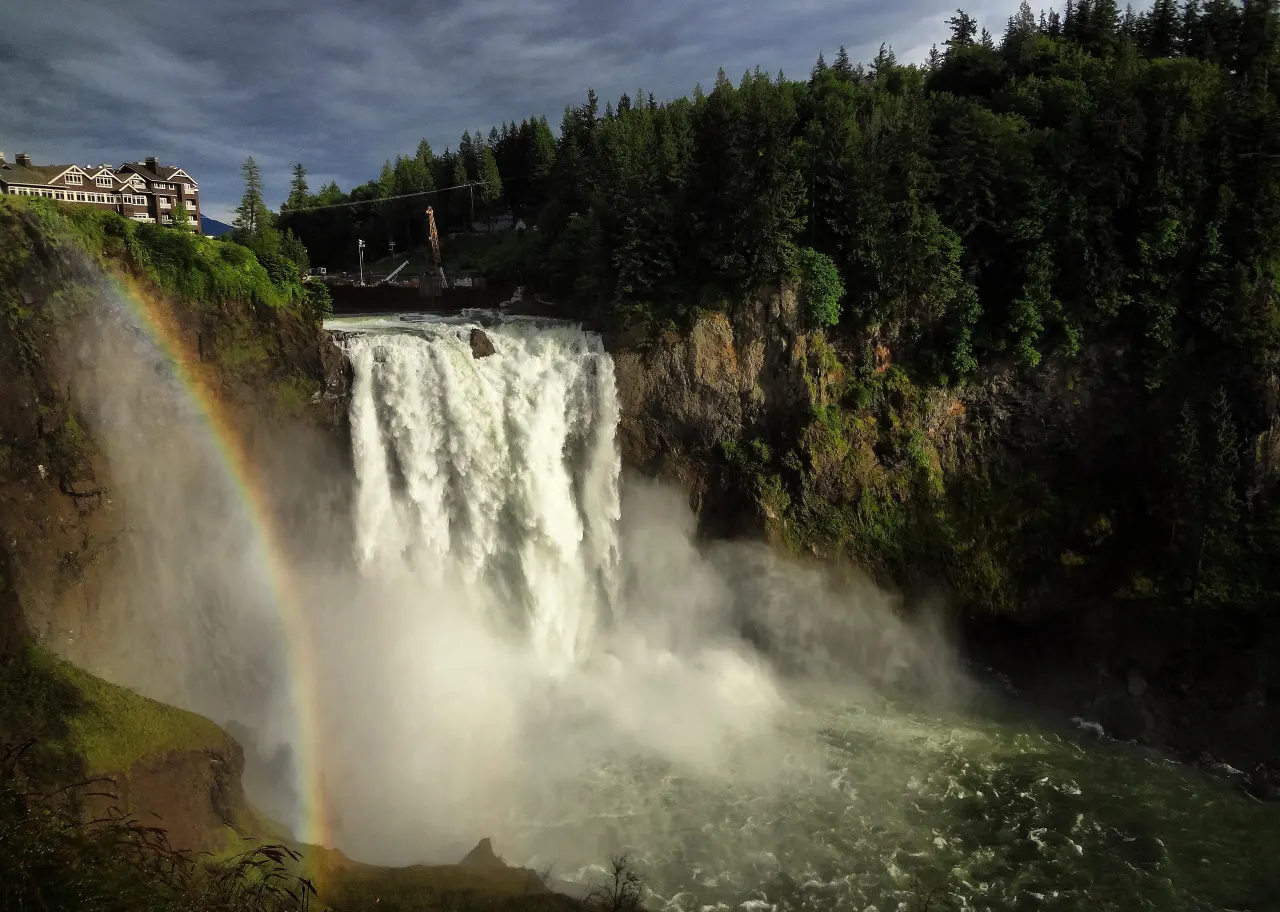
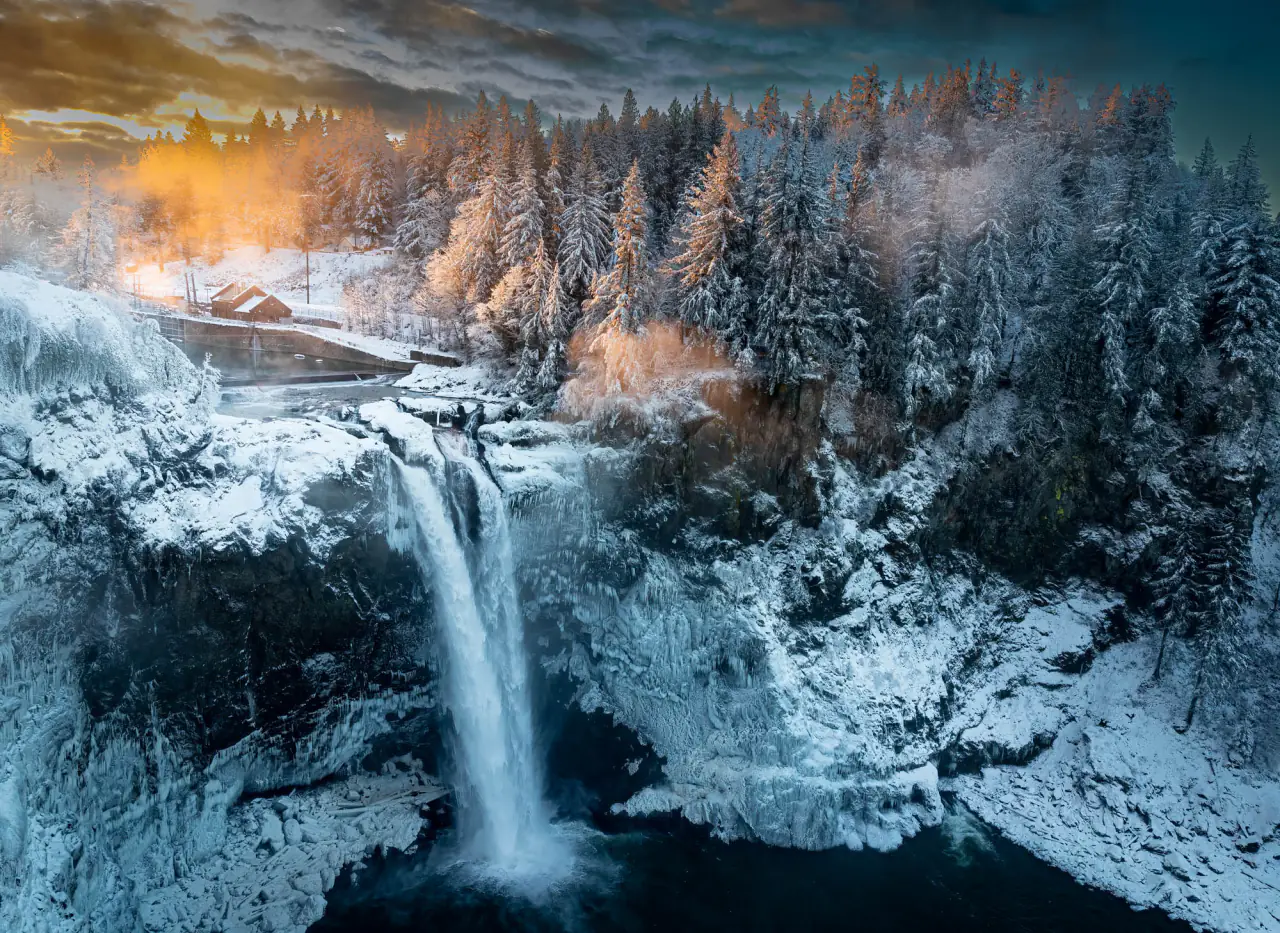
From November to March, Pacific storms can turn the falls into a wall of white water, and the spray can drift across the upper deck. The falls were still running high on the winter solstice in December 2025, nine days after a flood. Snow is uncommon at the falls but does fall some winters, briefly turning the gorge white. Crowds are lightest and days are short, and the trail can be muddy, so wear waterproof shoes.
Spring and early summer: snowmelt and green
April through June brings strong flows from melting Cascade snow, fresh green on the cliffs and longer days, a favorite season for photographers. Weekends get busy from Memorial Day. The hydroelectric museum opens for its season in late spring, and trains at the railway museum run every weekend from April.
Late summer and fall: lighter crowds, thinner falls
By late summer the falls can shrink to a few ribbons over dark rock, though the plunge pool turns a deep green and the trail is dry. Summer weekends are the busiest time of year, with long evenings and the best chance of rainbows. September and October bring fewer people, yellow bigleaf maples and, usually by late October, the first big rains. Hikers should do Rattlesnake Ledge and Mount Si before the snow.
Frequently asked questions
When is Snoqualmie Falls the most powerful?
During winter storms, roughly November through March, and spring snowmelt.
Is Snoqualmie Falls worth seeing in summer?
Yes, but the falls are thinner by late summer. Summer brings long evenings, a green plunge pool and the best chance of rainbows.